The 2026 Buyers Market Home Inspection Negotiation Playbook for Real Estate Agents
Podcast Overview

Inspection negotiations move on the same axis as the broader market: leverage. When inventory was thin and buyers were waiving inspections to win bids, repair requests were short, soft, or skipped entirely. That cycle is closing in many markets. As 2026 inventory loosens and buyers find themselves with more than one option on the table, the inspection-response phase becomes one of the most concrete places where shifting leverage shows up at the closing table.
The agents who will win in this environment are not the ones who suddenly start asking for more. They are the ones who ask for the right things, in the right language, with the right backup. Granular, defensible, professionally documented requests are what convert leverage into concessions. Vague or maximalist requests, on the other hand, are exactly what listing agents will use to push a buyers market deal into "well, then walk" territory.
Here is how to recalibrate your inspection negotiations as the market shifts beneath you.
How market conditions change the inspection conversation
In a sellers market, the listing agent has a stack of backup offers. Every repair request is read with the implicit threat of "we will move on to the next buyer." Buyer-side agents respond by under-asking, sometimes to the point of waiving inspections entirely. The repair request becomes a relationship document, not a leverage document.
In a buyers market, that calculus reverses. Listing agents are looking at one buyer, often after a longer days-on-market window, and they know a walked deal could mean weeks of additional carrying costs and a price drop. The inspection-response phase stops being a courtesy and starts being a real point of negotiation.
What this means in practice: requests that would have been laughed off in 2022 are reasonable in 2026. But the threshold for what gets taken seriously also rises. Listing agents in a soft market are more willing to negotiate, and also more willing to scrutinize. A sloppy request is a gift to the listing side because it lets them push back on form rather than substance.
Where buyer leverage actually comes from
Leverage in a buyers market is not just "they have to deal with us." It comes from three concrete sources that the inspection process can either amplify or waste:
- Time pressure on the seller. Carrying costs, relocation timelines, and competing listings in the neighborhood all push the seller to keep this deal alive.
- Comparable sales softness. If recent comps suggest the appraisal will land below contract, the seller is already nervous about a re-trade. A well-documented inspection list gives them a structured way to concede without feeling like they were strong-armed on price.
- Re-listing cost and risk. A relisted property after a fall-through is a yellow flag for the next buyer, and every additional day on market is real money.
A repair request that ignores these dynamics and just lists "everything from the report" treats every item as equally important and forfeits the strategic edge. A request built around prioritization, justification, and clear page references signals that the buyer-side team is organized, serious, and prepared to walk if needed.
The tactic that actually converts: granular, prioritized, page-referenced
In a buyers market, the request that converts is not the longest one. It is the most defensible one. Three attributes matter most.
Prioritization. Group items into safety, major systems, deferred-maintenance, and monitor categories. Make it visible which items are non-negotiable and which are signal flares. The listing side can read priority structure at a glance and bring it back to their seller in a way that does not feel like a wholesale attack on the property.
Justification. For each item, explain in one or two sentences why it matters. Cite the inspector's wording where possible. The listing side has to be able to take this to their seller and explain it, and they will appreciate the help. Justifications also pre-empt the most common pushback line: "this is just normal wear."
Page references. Cite the inspection PDF page for every item. This is non-trivial in 80-page reports with idiosyncratic numbering, and it is the single biggest professionalism cue you can send to the listing side. Page references make every item independently verifiable, which means the negotiation never has to slow down for fact-checking.
Granularity reduces the surface area for dismissal. When a request says "fix all electrical issues identified on page 22," the listing side can argue the scope. When it says "replace the double-tapped breaker at the main panel (page 22, item 3.4) and document the GFCI replacement in the kitchen (page 23, item 3.7) prior to closing," the conversation is suddenly about price, not principle.
Tactics that backfire when buyers have options
Some habits agents carry over from sellers market practice will actively cost their clients in 2026. Watch for these:
- The kitchen-sink request. Listing the entire inspection report's defects with no prioritization invites a wholesale "we will not address this list" response. It is easier for the listing side to reject everything than to triage on behalf of an unorganized buyer.
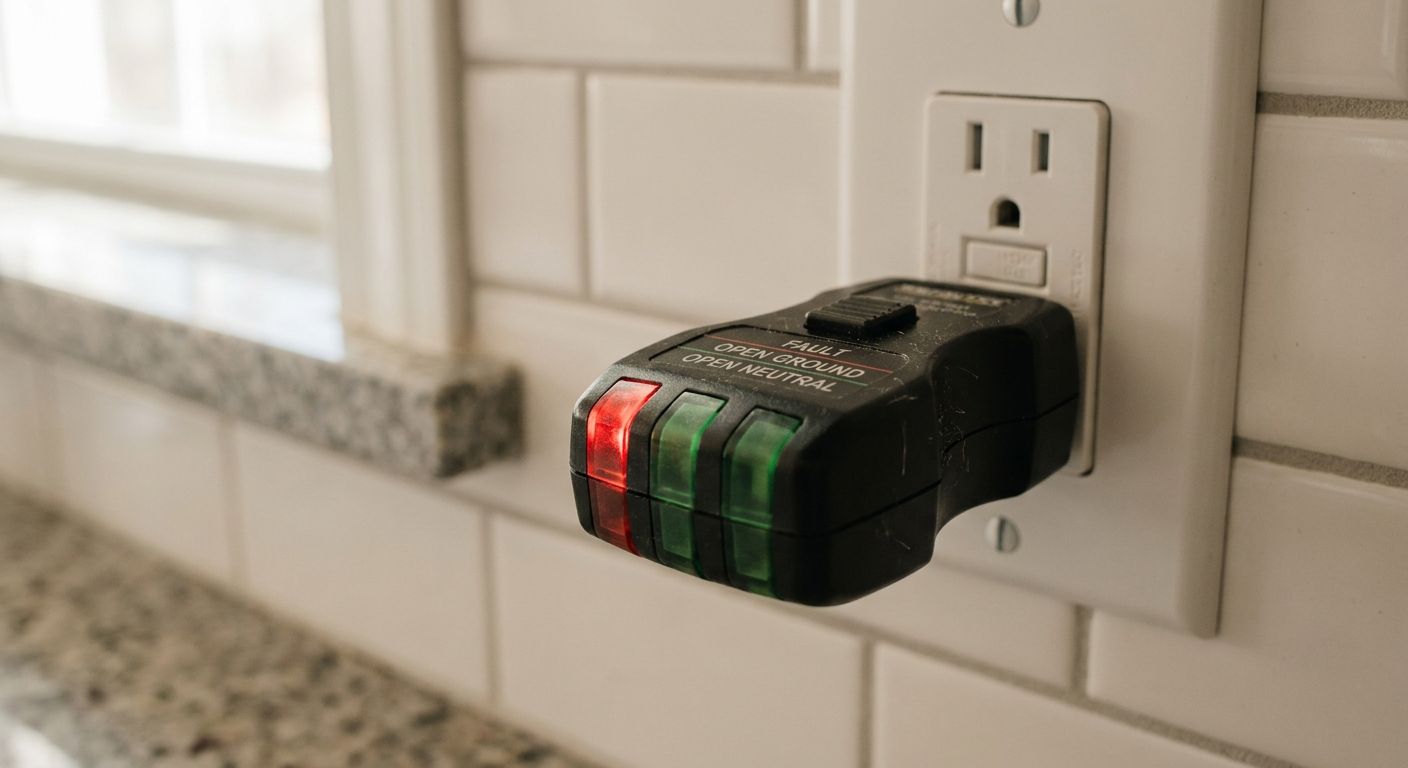
- Cosmetic mixing. Putting cosmetic items next to safety items dilutes the safety items. A cracked outlet cover should not share the page with a missing GFCI, even if both are technically findings.
- Soft language in a hard market. Phrases like "we would love it if the seller could consider" are misread in a buyers market. They signal that the buyer is unlikely to walk. Keep tone professional and direct without being aggressive.
- Verbal walk-back. Following up a written list with a phone call that says "but we are flexible on most of this" hands the negotiation back. Let the document do the work.
How to handle listing-side pushback
Even in a buyers market, listing agents will push back. The patterns are predictable and worth rehearsing:
- "This is normal wear." Counter with the inspector's exact language and severity rating. If the report says "Major Concern," that wording matters more than your interpretation.
- "The buyer accepted the property as-is in the offer." Re-read the contract. Most state forms preserve inspection contingencies even in as-is offers; "as-is" usually means the seller is not pre-committing to repairs, not that the buyer waives the right to ask.
- "We will offer a credit instead." Often acceptable, but only if the credit reflects the actual cost of the repair plus the friction of arranging the work. A credit that under-funds the work is not a concession; it is a transferred liability.
- "The seller will not address that." Ask which item specifically and why. Forcing item-by-item triage is harder for the listing side than letting them issue a blanket rejection.
A working timeline for buyers-market inspection negotiations
A rough schedule that works well in practice:
- Day 0 (inspection day): Walk the report with the inspector at the property when possible. Take photos of priority items.
- Day 1: Sort findings into safety, major systems, deferred-maintenance, and monitor categories.
- Day 1 to 2: Get cost estimates on the major-systems items. Even ranges are fine; ranges create credibility.
- Day 2 to 3: Draft the repair request with prioritization, justification, and page references. Send to the client for sign-off.
- Day 3 to 4: Submit the request. Avoid sending late on a Friday; give the listing side a working window to take it to their seller.
- Day 5 to 7: Negotiate in writing. Save verbal positioning for the final mile.
Common misconceptions to retire
Some assumptions are worth checking before each transaction:
- "More items equals more leverage." In a buyers market it is the opposite. Granularity equals leverage; volume equals dismissal.
- "Listing agents will not budge on cosmetic items." In a soft market they often will, especially close to a price-sensitive comp. But you have to ask cleanly.
- "We should keep our credit ask low to preserve goodwill." Goodwill is preserved by professionalism, not by underselling the work. Anchor on actual cost.
- "Walking is the last resort." In some 2026 markets, walking is a real option that strengthens every prior request. The credible willingness to walk is itself part of the leverage.
What listing-side will likely test in 2026
Listing agents are recalibrating in real time too. Expect them to test where the buyer's resolve actually sits. They may slow-walk responses in the first 24 hours, hoping the buyer's emotional commitment will soften the asks. They may agree quickly to small items and push back hard on the largest one, hoping a partial win will defuse pressure. They may also propose a credit at a lower number than the documented cost. Recognizing these moves as routine, not as personal escalation, is half the battle. Documented, page-referenced requests give the buyer-side team a stable baseline to keep coming back to.
Where the workflow makes this faster
This level of detail used to be expensive to produce. Sorting an 80-page report into prioritized categories, locating each finding's exact page reference, drafting agent-quality justification language, and packaging the result into a clean addendum was a several-hour exercise per transaction. That cost is precisely what made the kitchen-sink request the path of least resistance.
InspectionResponse changes the math. An agent uploads the inspection PDF, the platform reads the report and prioritizes findings by severity and system, and the agent reviews and refines a draft repair request with page references and professional justification language already in place. The strategic decisions stay with the agent; the production work goes from hours to minutes. In a buyers market, where the granular request is the request that converts, that is the difference between leveraging the moment and leaving concessions on the table.
The market is shifting. The agents who recalibrate their inspection-response approach now will close more 2026 deals on better terms for their clients.
Additional Resources
Briefing Document & Key Takeaways
Title: The 2026 Buyers Market Inspection Negotiation Briefing
Audience: Buyer-side real estate agents, transaction coordinators, brokers, and team leads adjusting tactics as inventory loosens and leverage moves toward buyers.
Purpose: Equip agents with a fast, defensible framework for inspection negotiations in a softening market, where granular and well-documented repair requests outperform either kitchen-sink lists or under-asking out of habit.
Key takeaways:
- Leverage in a buyers market shows up most concretely in the inspection-response phase, not in the offer.
- Granular, prioritized, page-referenced requests convert at higher rates than either maximalist or soft requests.
- Listing-side pushback patterns are predictable; rehearsed responses save the deal.
- Credits should equal repair cost plus friction, not just the lowest contractor quote.
- A credible willingness to walk strengthens every other ask in a soft market.
- Sorting and drafting time, not strategy, is the bottleneck most agents need to fix.
Recommended use: Review before drafting any post-inspection repair request in a market where days-on-market is rising or comp velocity is slowing. Share with newer agents on the team before their first buyers-market negotiation. Use as a pre-call refresher when the listing side has already telegraphed pushback.
Study Guide
Market Context and Leverage
- What three concrete sources of leverage tend to favor buyers in a softer 2026 market?
- Why does a sloppy or maximalist repair request actually weaken a buyer's negotiation position even when the buyer has leverage?
- How does the inspection-response phase change in importance between a sellers market and a buyers market?
Repair Request Construction
- What are the three attributes of a repair request that converts well in a buyers market?
- Why do page references function as a professionalism cue to the listing side?
- How does prioritization (safety, major systems, deferred-maintenance, monitor) help the listing agent on the other side of the deal?
- What is the difference between a useful justification line and an opinionated one?
Listing-Side Pushback Patterns
- How should an agent counter the "this is just normal wear" pushback?
- What does "as-is" typically mean in most state forms relative to the inspection contingency?
- When is a credit-in-lieu-of-repairs a fair concession, and when is it a transferred liability?
Tactics and Anti-Patterns
- Why does soft "we would love it if" language tend to backfire in a buyers market?
- What is the risk of a verbal walk-back after submitting a written repair request?
- Why does mixing cosmetic items with safety items in the same list weaken both?
Application Exercise
You are buyer-side on a transaction in a market where inventory has roughly doubled year over year and the subject property has been on the market for 38 days. The inspector identifies 22 findings across electrical, plumbing, roofing, and cosmetic categories. The most serious is a double-tapped breaker on the main electrical panel; there are also three plumbing items, two minor roof items at end-of-life, and a long list of cosmetic and deferred-maintenance issues. Outline a one-page repair request strategy that uses prioritization, justification, and page references, and write the opening paragraph of the request in agent voice.
Answer Key
Market Context and Leverage
- Time pressure on the seller (carrying costs, relocation timelines, competing listings), comparable sales softness (appraisal risk and the seller's nervousness about a re-trade), and re-listing cost and risk (a relisted home is a yellow flag and adds days on market).
- A sloppy request gives the listing side a way to push back on form rather than substance, which lets them avoid engaging with the merits of the request and preserves their seller's posture.
- In a sellers market the inspection response is largely a relationship document; in a buyers market it becomes a real negotiation lever where concessions are won or lost.
Repair Request Construction
- Prioritization, justification, and page references.
- Page references make every item independently verifiable in an 80-page report, signal that the buyer's team is organized, and remove fact-checking friction from the negotiation.
- Prioritization gives the listing agent a structured way to take the request back to their seller and triage, rather than reacting to a flat list as a wholesale attack on the property.
- A useful justification cites the inspector's wording, the severity rating, or a clear functional consequence; an opinionated one editorializes about the seller's maintenance habits or makes claims the inspector did not.
Listing-Side Pushback Patterns
- Counter with the inspector's exact language and severity rating; if the report says "Major Concern," that wording outweighs interpretation.
- "As-is" typically means the seller is not pre-committing to repairs at offer time, not that the buyer has waived the right to request repairs based on the inspection.
- A credit is fair when it covers actual repair cost plus the friction of arranging the work; it becomes a transferred liability when it under-funds the repair and the buyer ends up absorbing the gap after closing.
Tactics and Anti-Patterns
- Soft language signals to a listing agent that the buyer is unlikely to walk, which removes the credible threat that makes the request convert in the first place.
- A verbal walk-back undoes the document, hands the listing side a softened position, and is hard to reset; let the document do the work.
- Cosmetic items dilute safety items by association; the listing side can wave away the whole list as nitpicking, and the safety items lose their gravity.
Application Exercise (Sample Answer)
A working strategy: lead with the double-tapped breaker as a safety item with the inspector's exact language and a documented cost range; group the three plumbing items as major-systems items with page references and a single justification each; treat the two end-of-life roof items as a request for a credit reflecting current contractor estimates rather than a repair requirement; and explicitly tag the long cosmetic list as monitor-only items the buyer is documenting but not requesting. Opening paragraph: "Following the home inspection completed at [property] on [date], we are submitting the following repair request from the buyer. Items are organized by priority, each item references its source page in the inspection report, and we have included the inspector's severity rating where applicable. We are open to credit-in-lieu where the cost is clearly documented."
Glossary of Key Terms
- Addendum: A formal document amending the original purchase contract; used to record agreed-upon repair terms or credits after inspection.
- As-is: A contract designation indicating the seller does not pre-commit to repairs at offer time; in most state forms it does not waive the buyer's inspection contingency.
- Backup offer: A secondary offer the listing side holds in case the primary contract falls through; common in sellers markets, scarcer in buyers markets.
- Carrying cost: Ongoing seller costs (mortgage, taxes, insurance, utilities, HOA) accruing while the property remains under contract or on market.
- Comp: A comparable recently sold property used to estimate a subject home's market value.
- Contingency: A contract clause that allows a party to exit or renegotiate if a condition is not met; the inspection contingency is central to repair negotiations.
- Credit in lieu: A seller credit at closing offered instead of completing repairs; should match repair cost plus friction.
- Days on market: The number of days a listing has been active; rising days-on-market often shifts leverage toward buyers.
- Deferred maintenance: Maintenance items not yet addressed but not currently failing; useful as a separate priority category in repair requests.
- Double-tapped breaker: Two conductors landed under a single breaker terminal not rated for two; a common safety finding on residential panels.
- GFCI: Ground-fault circuit interrupter; a safety device required in wet-area outlets in most modern code cycles.
- Granular request: A repair request that addresses items individually with specifics rather than as a block.
- Inspection contingency: Contract right enabling the buyer to negotiate, request remedies, or exit based on inspection findings within a defined window.
- Justification: The one-or-two-sentence explanation accompanying each item in a repair request; cites the inspector or a clear functional consequence.
- Kitchen-sink request: An anti-pattern repair request that lists every defect from the report without prioritization.
- Listing side: The seller's agent and team across the negotiation table.
- Major Concern: A common inspection severity label indicating an item that should be repaired or replaced.
- Page reference: The specific page or item number in the inspection PDF where a finding lives; foundational to a defensible request.
- Priority category: A bucket like safety, major systems, deferred-maintenance, or monitor used to sort inspection findings.
- Re-trade: A late-stage attempt to renegotiate price or terms after initial agreement, often after appraisal or inspection.
- Repair request: The buyer's formal post-inspection ask; can request repair, credit, or replacement.
- Safety issue: An inspection finding flagged as posing risk of harm; usually the highest priority category in a repair request.
- Severity rating: The classification an inspector assigns to a finding (e.g., Safety Issue, Major Concern, Maintenance Item).
- Walk: Buyer's exercise of the inspection contingency to exit the contract; the credibility of walking is itself a leverage source.
Frequently Asked Questions
What does "buyers market home inspection negotiation" actually mean?
It is the post-inspection repair request and concession process when buyers have more options than sellers, often signaled by rising days-on-market and softer comps. In this environment, the inspection response is one of the most concrete points where leverage shows up, and granular, defensible requests outperform either maximalist lists or soft asks.
How is repair-request strategy different in a buyers market versus a sellers market?
In a sellers market, repair requests tend to be short or skipped entirely to preserve the deal against backup offers. In a buyers market, listing agents are negotiating against fewer alternatives, so detailed requests get real engagement. The threshold for professional documentation rises in both directions: more leverage rewards more granular requests but also exposes sloppy ones.
Why do page references matter so much in a repair request?
They make every item independently verifiable in a long inspection report, remove fact-checking friction from the negotiation, and signal organization to the listing side. They also make it harder for the listing side to argue scope or claim the issue was misrepresented.
What priority categories should a repair request use?
A useful structure is safety, major systems, deferred-maintenance, and monitor. Safety items are non-negotiable, major systems are the substantive ask, deferred-maintenance items often resolve as credits, and monitor items document concerns the buyer is tracking but not requesting.
Is a credit in lieu of repairs always a fair concession?
Only when the credit reflects the actual cost of the repair plus the friction of arranging the work after closing. A credit that under-funds the repair simply transfers the cost to the buyer, which is not the same as the seller addressing the issue.
What pushback should agents expect from listing agents in a 2026 buyers market?
Common patterns include "this is normal wear," appeals to as-is language in the offer, counter-offers of small credits, and item-by-item rejection of the largest asks. Most of these are routine moves rather than signals that the deal is dead, and well-documented requests give buyer-side a stable baseline to come back to.
Does an as-is purchase agreement mean the buyer cannot ask for repairs?
In most state forms, no. As-is typically means the seller is not pre-committing to repairs at offer time, but the buyer's inspection contingency is preserved. Always re-read the specific contract language before relying on this.
How long should the repair-request turnaround take?
A practical window is roughly five to seven days from inspection to negotiated outcome: a day to sort findings, a day or two to gather cost estimates, a day to draft and review with the client, and a few days for the listing side to respond and negotiate.
How do agents produce this level of detail without burning hours per transaction?
The bottleneck is sorting, page-referencing, and drafting, not strategy. Tools that read the inspection PDF and produce prioritized, page-referenced repair-request drafts compress that work from hours to minutes, leaving the strategic decisions where they belong: with the agent.